Resources / INSIGHTS
Size-Inclusive Design: Why Traditional Sizing Fails Most Shoppers
Traditional sizing was built for one body type. 88% of women do not match it. Here is how the system works, where it breaks down, and what personalized sizing can change.
By Cynthia, Co-founder · March 2026 · 7 min read
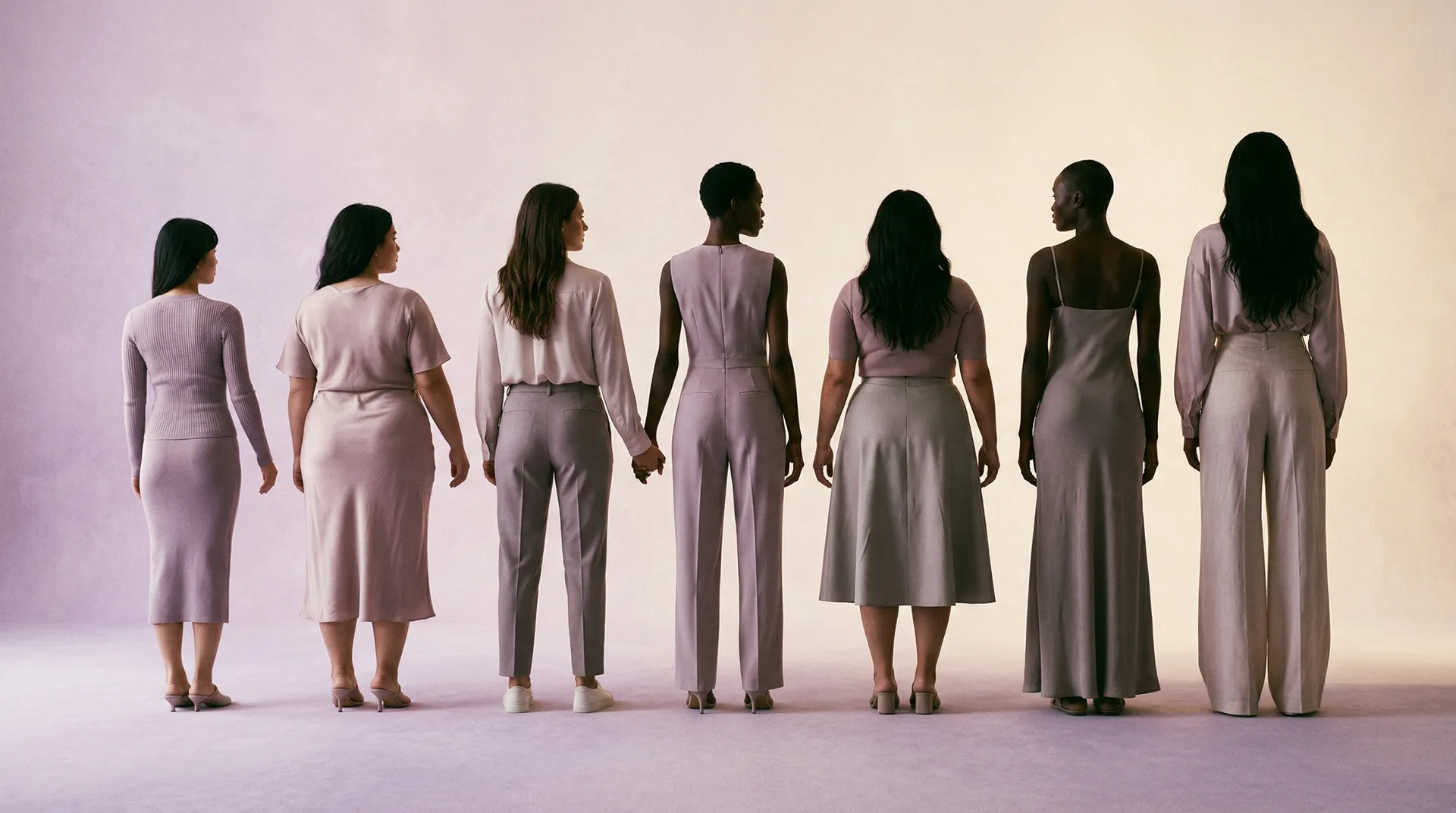
Most sizing systems in use today are based on body measurement studies from the 1940s and 1950s. Those studies sampled a narrow demographic and assumed a single "standard" body proportion for each size. A size 10 assumes a specific ratio between bust, waist, and hips. If your body does not match that ratio, the size does not fit. For the majority of shoppers, it does not.
How Traditional Sizing Works
A brand defines a base size (usually a size 8 or 10 in women's clothing). They measure one fit model. Then they "grade" up and down: adding or subtracting a fixed amount to each measurement per size step. The assumption is that all bodies scale proportionally. A size 14 is simply a size 10 with 2 inches added everywhere.
This is the foundation of nearly every size chart on the internet. And it is fundamentally flawed.
Where It Breaks Down
Research from the University of Cambridge found that only 12 percent of women match the hourglass figure that most sizing systems assume. The other 88 percent have proportions that do not follow the standard grading logic. Some carry more weight in their hips. Some have broader shoulders relative to their waist. Some have longer torsos. Some have shorter inseams.
A size chart cannot account for any of this. It gives every person at a given height and weight the same recommendation, regardless of their body shape. The result is that 70 percent of fashion returns cite poor fit as the primary reason (Source: McKinsey).
Extending the Range Is Not Enough
Many brands respond by extending their size range from XS-XL to XXS-5XL. This is a positive step, but it does not fix the underlying problem. If the grading logic still assumes one body proportion per size, a 2XL will be designed for one specific body shape. A shopper who is 2XL with a different shape will still get a garment that does not fit.
True inclusivity is not about more sizes. It is about personalization. Understanding that two shoppers who wear the same size label may have completely different bodies, and both deserve a recommendation that works for them specifically.
What Personalized Sizing Changes
Instead of fitting shoppers into a fixed grid of sizes, personalized sizing starts with the individual. What are your specific proportions? What is your fit preference? How does this particular garment's cut interact with your body shape? The recommendation adapts to each person rather than asking each person to adapt to the chart.
For brands, this means fewer returns, higher satisfaction, and access to a massive underserved market. The plus-size fashion market alone is valued at over $288 billion globally (Source: Allied Market Research). Shoppers who have historically struggled with sizing become the most loyal customers when a brand finally gets their fit right.
Beyond the Technology
Personalized sizing is one piece. It needs to be paired with inclusive product design, diverse representation, and a genuine commitment to serving all bodies. But without the ability to deliver accurate, personalized recommendations across the full range of body types, even the best intentions break down at the point of purchase.